Dr B.R. Ambedkar: from “no peon (no servant), no water” to the Constitution of India
Coming from the poorest possible of backgrounds in India Dr Ambedkar became an eminent lawyer and economist.
Growing up “untouchable”
Bhimrao Ambedkar was born in 1891 into a Mahar family, a community then treated as “untouchable”. At school in Satara he had to sit on a piece of sacking he brought from home, and he was not allowed to touch the water tap. When he was thirsty, the school peon (a servant) poured water for him. If no peon was there, he went without. As he later put it: “no peon, no water”.
London: the LSE and Gray’s Inn
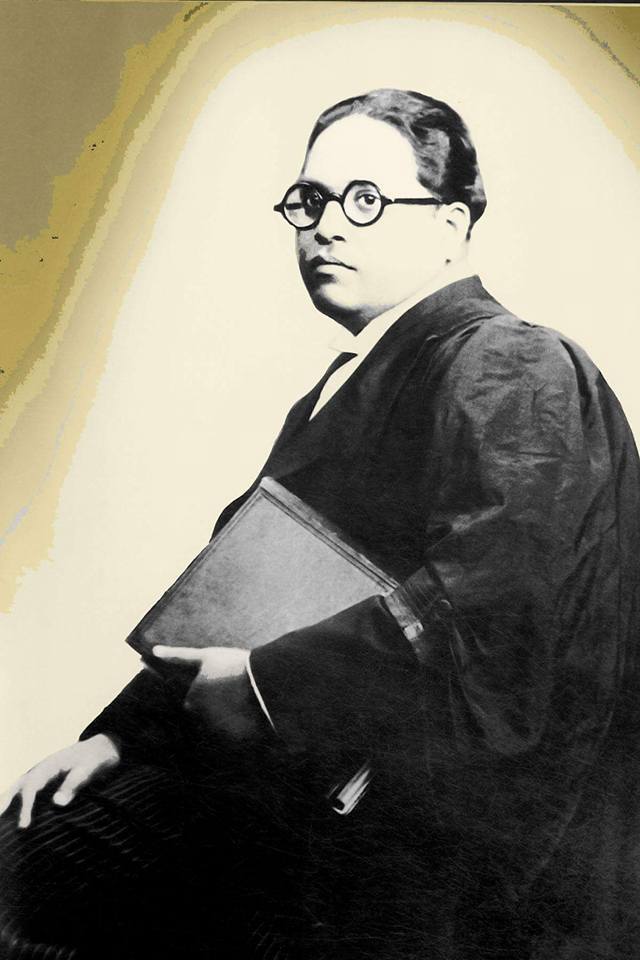
He studied at Columbia University and in 1916 came to London. He registered at the London School of Economics and was admitted to Gray’s Inn that November. His scholarship ran out and he was recalled to India. The ship carrying his books and papers was torpedoed. He returned in 1920, lodging at 10 King Henry’s Road, Primrose Hill, which is now the Ambedkar House museum. He completed a doctorate, The Problem of the Rupee, and LSE believes he was the first Indian to earn one there. Gray’s Inn called him to the Bar on 28 June 1922.
Dr Ambedkar as a barrister, 1922. Public domain, via Wikimedia Commons.
The Constitution of India
Back in India he fought caste discrimination as a lawyer and politician. In 1947 he became chairman of the committee drafting India’s Constitution, which abolished untouchability and was adopted in November 1949. He was independent India’s first Law Minister.
Conversion to Buddhism
On 14 October 1956, at Nagpur, he converted to Buddhism with hundreds of thousands of followers. He died seven weeks later.
The 1953 BBC interview
In 1953 a BBC interviewer asked him whether democracy would work in India. The interviewer kept looking for reassurance and pointed to the Prime Minister’s speeches against caste. Ambedkar was unmoved: he was “sick of speeches”, he said, and wanted action. Watch the interview on BBC News India.
Remembering Dr Ambedkar
His London story is kept alive by the Federation of Ambedkarite and Buddhist Organisations UK (FABO UK). It gave Gray’s Inn the portrait that hangs in the Ambedkar Room at 10 South Square, and the bust of him at the LSE.
In 2026 the central government declared 14th April, Dr Ambedkar’s birthday, a public holiday. Government offices, banks and stock markets closed, and many states treat it as a holiday too. People mark it with processions, garlanding his statues and gathering at Chaitya Bhoomi in Mumbai and Deekshabhoomi in Nagpur. In London, it’s also celebrated at Ambedkar House and at events organised by FABO UK.
Hear more stories like this on our Legal London walking tour of the Royal Courts of Justice and the Inns of Court.
Sources
LSE Library – Educate, Agitate, Organise
Supreme Court of India – Centenary of Dr Ambedkar’s enrolment
The Leaflet – Ambedkar Room and Portrait at Gray’s Inn
Wikipedia – Waiting for a Visa
Round Table India – transcript of the 1953 BBC interview
BBC News India – 1953 interview video
Wikimedia Commons – Ambedkar as Barrister, 1922